
Loading...
Serving Rockledge, FL and surrounding areas. (321) 358-0086
Every addition, deck, or carport you build is only as solid as the footings underneath it. In Rockledge's sandy soil, getting the footing right from the start is what keeps your structure level for decades.
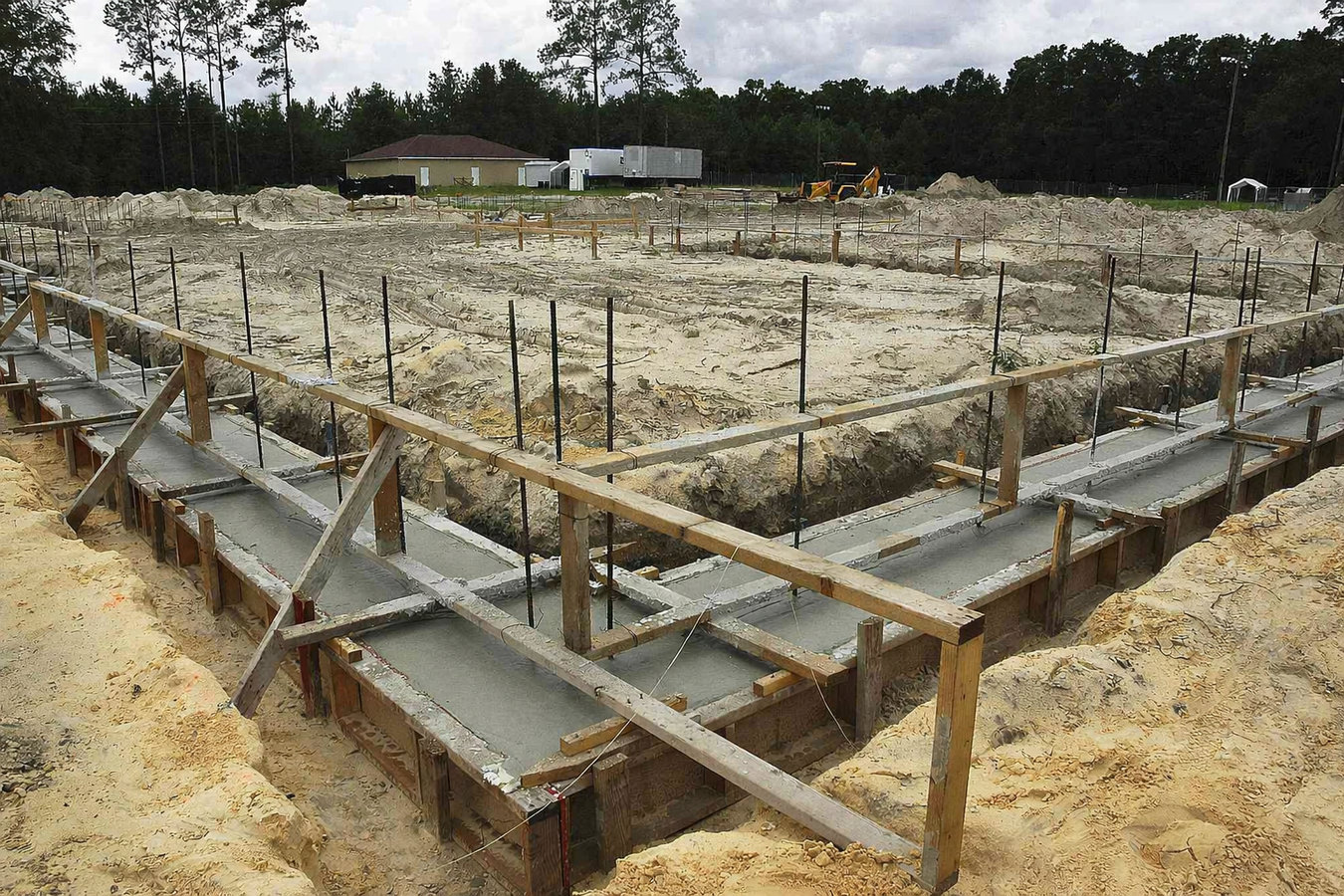
Concrete footings in Rockledge are the underground concrete base that carries the weight of any structure above them - a crew digs to the required depth, sets steel reinforcement inside forms, gets the pre-pour inspection approved, and pours the concrete, with most residential projects taking one to two work days plus a few days of curing before construction on top can begin.
Footings are rarely visible once a project is done, which is why many homeowners underestimate how much they matter. A footing that shifts or settles in Rockledge's sandy, high-moisture soil will cause everything above it to move with it - doors that stick, diagonal cracks at window corners, and walls that pull away from floors are all signs of a footing problem that started underground years earlier. Getting it right the first time is far less expensive than dealing with the damage afterward.
If your project also involves raising or leveling an existing foundation, our foundation raising service addresses situations where footings have already shifted and the structure above them needs to be brought back level. Both services often work together on older Rockledge homes.
Any room addition, covered porch, carport, deck attached to your home, or freestanding garage requires proper concrete footings before framing begins. This is true even for smaller projects like a pergola or shed on a permanent base - if it carries a roof or significant load, it needs a footing underneath it.
When a footing shifts or settles unevenly, the frame of your house moves with it - and doors and windows are often the first place you notice. Diagonal cracks running from the corners of window frames or doors that no longer close easily are signs that the foundation system, including footings, may be worth having a professional evaluate. This is worth checking in older Rockledge homes where soil preparation standards were less rigorous.
Many Rockledge homes are built with concrete block walls that sit directly on footings. Horizontal cracks near the base of an exterior wall, or a bottom course of block that appears to be pulling away from the ground, can mean the footing below has shifted. Sandy soil and the area's high water table can accelerate this kind of movement over time.
If a post that used to stand straight now leans slightly, or if you can see a gap between the post base and the concrete pad it sits on, the footing underneath has likely moved. In Rockledge's wet summers, water can erode the soil around shallow footings and cause them to shift. This is a safety issue, not just a cosmetic one.
We handle the full footing process - site visit, written estimate, permit application, excavation, forming, steel placement, and the pour - with a single point of contact from first call through final inspection. Every footing is sized for the load it will carry and the soil conditions at your specific site. Rockledge's sandy, high-water-table soil means we sometimes need to dig wider or deeper than a standard footing spec calls for, or take steps to keep the trench dry before pouring. We assess that at the site visit and factor it into the estimate so there are no surprises on the day of the pour. If you are also planning a foundation installation as part of a larger construction project, footings are the first step and we can scope both together.
Steel reinforcement - rebar placed inside the forms before the pour - is standard on all structural footings we install. Brevard County sits in a high-wind zone, and Florida's building code requires footings to handle both the downward weight of the structure and the uplift forces created by strong storm winds. We design every footing to meet current code requirements, which means the Brevard County inspector's pre-pour visit is a formality rather than a risk. We have worked with local inspectors for years and know exactly what they check.
Continuous concrete bases running the length of a wall - the standard choice for room additions, garages, and enclosed structures.
Isolated concrete pads that support individual posts or columns - typically used for decks, pergolas, carports, and freestanding structures.
Sized and reinforced to meet Florida's current wind-load requirements - essential for any structure attached to your home in Brevard County.
For properties where existing footings have shifted, cracked, or no longer meet code - demolition and replacement before new construction begins.
Sandy soil is the baseline in Rockledge and across most of Brevard County. It drains fast, which is good for some things, but it also has lower load-bearing capacity than the denser soils you find further inland. A footing sized for firm soil in another state may not be adequate here, and a contractor who does not ask about local soil conditions before quoting is likely not accounting for this. Add in a water table that can sit close to the surface during the rainy season, and you have conditions where the trench can fill with water before the pour if no one has a dewatering plan. These are the details that separate a footing that stays level for decades from one that starts moving within a few years.
Florida's building code also imposes high-wind requirements on any structure attached to a home in Brevard County - requirements that affect footing size and steel placement in ways that matter. The permit and inspection process enforces this, which is one reason we never skip permits on structural work. Homeowners in Titusville, FL and Melbourne, FL face the same soil and wind-load conditions, and we serve both areas regularly.
We respond within one business day and schedule a free site visit. We look at the ground conditions, measure the area, and give you a written estimate that specifies depth, width, and reinforcement - not just a bottom-line number.
We submit the Brevard County building permit application on your behalf before any digging begins. We also call 811 - Florida's utility-marking service - to have underground lines flagged. Permit review typically takes one to two weeks.
The crew digs to the permitted depth, sets the forms, and places rebar inside before the county inspector visits. The pre-pour inspection happens at this stage - the inspector confirms depth, width, and steel placement match the approved plans before we pour.
Once the inspection is approved, we pour and finish the concrete. In Rockledge's summer heat, we pour early in the morning and keep the surface moist to prevent surface cracking. After curing, we coordinate the final inspection so your next phase of construction can move forward.
We visit the site, assess the soil conditions, and give you a written estimate that covers depth, reinforcement, and permits - no guessing.
(321) 358-0086Unpermitted footings are one of the most common issues that stalls home sales in Brevard County. We pull permits as a standard part of every structural footing job, so your project is fully documented and inspection-verified before the concrete is buried.
Sandy, low-bearing-capacity soil is the norm throughout Rockledge. We assess soil conditions at your specific site before quoting and adjust footing dimensions accordingly - not a one-size-fits-all spec designed for denser soil elsewhere.
Hitting standing water in the trench before the pour is common in parts of Brevard County, especially during rainy season. We come prepared with a dewatering plan so the trench stays dry long enough to pour correctly - not a problem we improvise around on the day of the pour.
Brevard County's high-wind designation means footings supporting attached structures must be engineered to handle storm uplift forces. Every footing we pour meets current Florida building code wind requirements - the county inspector verifies this before the pour.
When you combine proper permitting, soil-matched sizing, and storm-resistant reinforcement, you get a footing that keeps your structure level and stable through every season Florida throws at it. That is the standard we hold on every project in Rockledge and across Brevard County.
External reference: Brevard County Building Services - permit and inspection requirements for structural concrete work in Brevard County. Florida Building Commission - statewide structural and wind-load standards.
When footings have already shifted and the structure above them needs to come back level, foundation raising is the next step.
Learn MoreFor new construction or major additions where a complete foundation system - not just isolated footings - is required.
Learn MorePermit season in Brevard County fills up fast - call today to lock in your start date before the next wave of projects does.